Front-line employees form the backbone of countless industries. Attracting and retaining these key team members, especially in a tight labor market, has never been more critical. However, high turnover and low engagement among front-line workforces are continuing roadblocks. The solution isn’t...
Search Results
The Soft Skills Crisis is Getting Worse: What Can L&D Do?
As artificial intelligence (AI) gains a greater foothold in daily life, Generation Z remains far ahead of the curve in using this new technology at home and at work. These digital natives, born between 1997 and 2012, are the first generation to grow up with the internet and social media, so it’s...
Why 74% of Employee Training Is Forgotten: The Forgetting Curve
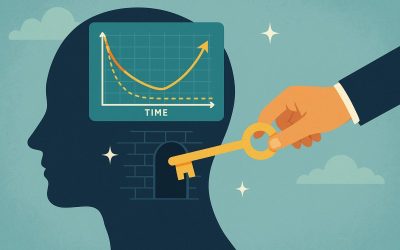
Your team just completed a week-long training program. Thousands spent. Hours invested. Everyone’s certified. But here’s the bitter truth: within 48 hours, most of what they learned has already started to vanish. Research shows that employees retain approximately 25% of the information after two...
Best Practices in Corporate Training to Improve Employee Retention and Performance
Discover 10 best corporate training practices to boost performance, enhance retention, and build a future-ready, engaged workforce. Best Practices In Corporate Training In today's highly competitive business environment, companies are increasingly recognizing the importance of investing in human...
Repetition and Reinforcement: The Dynamic Duo of eLearning for Enhanced Retention
In this article, we discuss the significance of repetition and reinforcement, explain the Ebbinghaus forgetting curve, and provide examples of how to implement repetition and reinforcement in eLearning and microlearning through quizzes. Why Are Repetition and Reinforcement Important? Repetition...
Defeating the Ebbinghaus Forgetting Curve: The Key to Workplace Learning Success
Have you ever attended a training session or workshop at work, only to find yourself forgetting most of what you learned within a few days? I have, except replace "a few days" with "a few minutes". Yes, I’m that forgetful sometimes. It’s a frustrating experience that most can relate to, unless...
Learning Retention: Best Practices to Improve Retention
Learning retention is the ability of employees to remember and apply training content over time. It directly impacts how well training translates into on-the-job performance and business outcomes. Retention is notoriously fragile. Research shows that within 1 hour, learners forget an average...
Reimagining Long-Form Training with Microlearning
Long training sessions can exhaust learners. They often result in information overload. Microlearning provides a powerful solution by breaking down complex topics into smaller, more digestible pieces. Let’s explore how microlearning works, its benefits, theory, challenges, and practical...
Make Training More Effective with Microlearning and AI
When people think of microlearning, it’s often viewed as a tool for reinforcement of longer-form training, something used after the main event to help employees retain what they’ve learned. And while microlearning is incredibly effective in that role, it’s time to expand that view. Microlearning...
Coaching Skills That Strengthen Employee Performance
In many organizations today, the conversation around coaching has moved beyond theory. What leaders are asking now is: How do we actually build coaching capability that changes behavior, not just knowledge? The answer starts within. Instead of relying solely on external experts, learning and...
How to Use Instructional Videos to Boost Engagement in Compliance Training
Isn’t it frustrating when a 30-page policy handbook goes unread? Compliance training often fails because dense regulations and text-heavy materials overwhelm learners. Short, animated explainer videos can turn complex rules into clear, memorable narratives, offering a powerful remedy....
Key Techniques to Boost Learning Retention
Learning retention is the cornerstone of effective training programs, yet it remains a challenge for many organizations. Employees are often bombarded with information, making it difficult to absorb and retain new knowledge. As a result, businesses often find themselves in a cycle of constant...